Blog
HTA Insights & Knowledge
Plain-language articles on health technology assessment, market access and reimbursement — from the fundamentals to the latest European policy changes.
Looking for a quick definition? See the HTA glossary. For how national bodies work, see the HTA agency profiles.
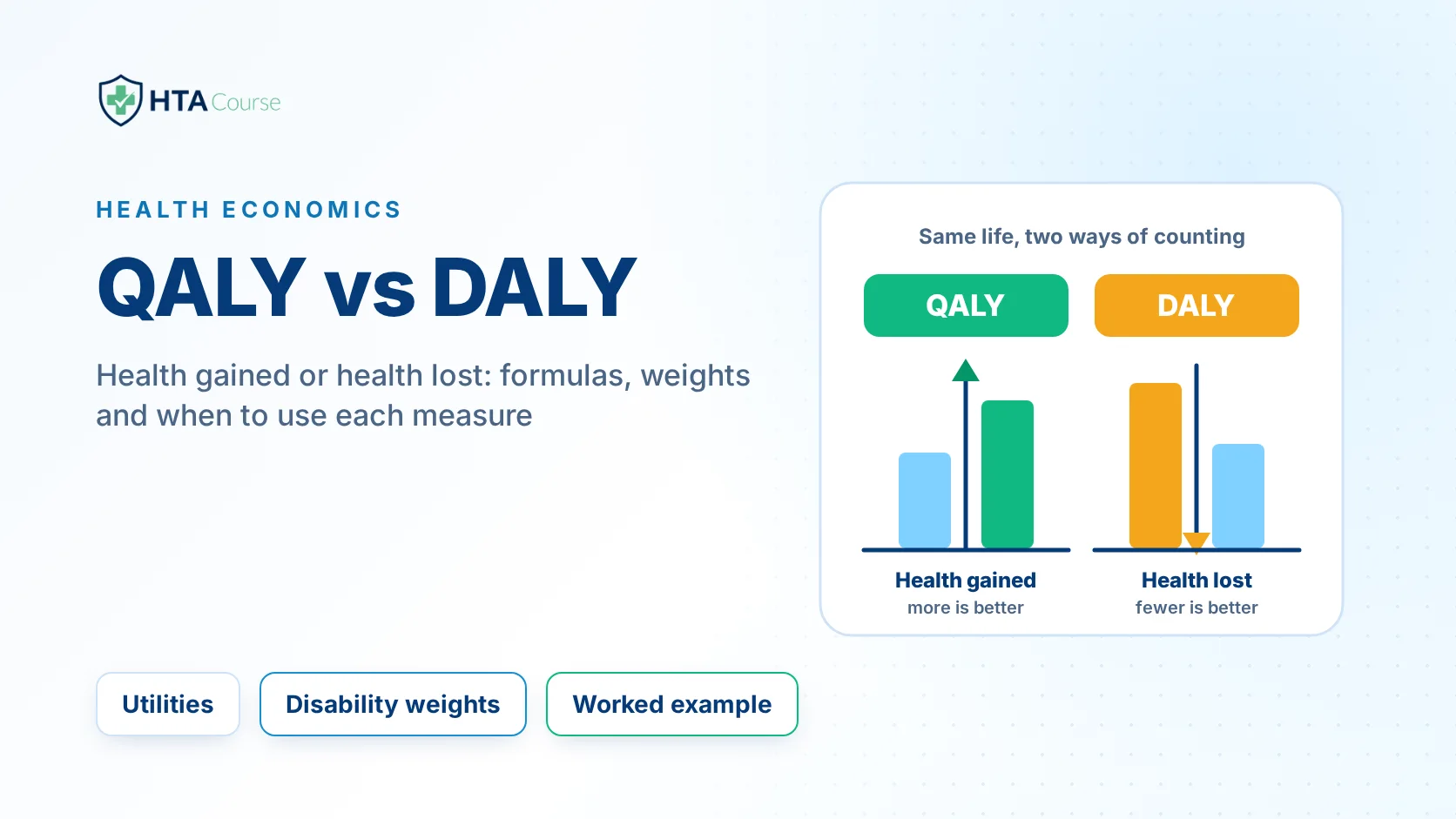
Health Economics
QALY vs DALY: Differences, Formulas and When to Use Each
QALYs count health gained; DALYs count health lost. See the formulas, how utilities differ from disability weights, a worked example and who uses which measure.
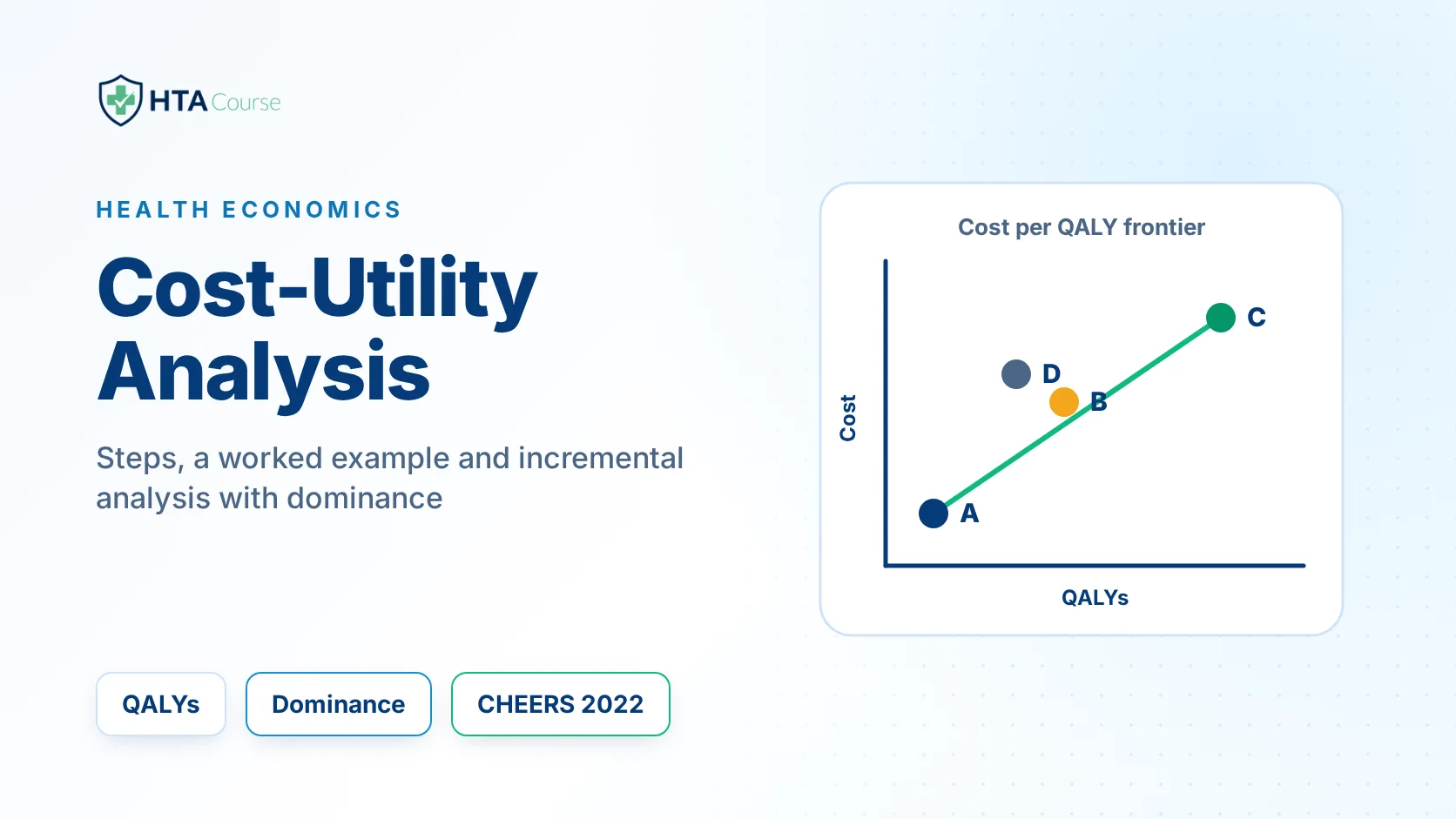
Health Economics
Cost-Utility Analysis: Steps, Worked Example and Pitfalls
A practical guide to cost-utility analysis in HTA: how utilities, costs and discounting produce a cost per QALY, and how to run a fully incremental analysis with dominance.
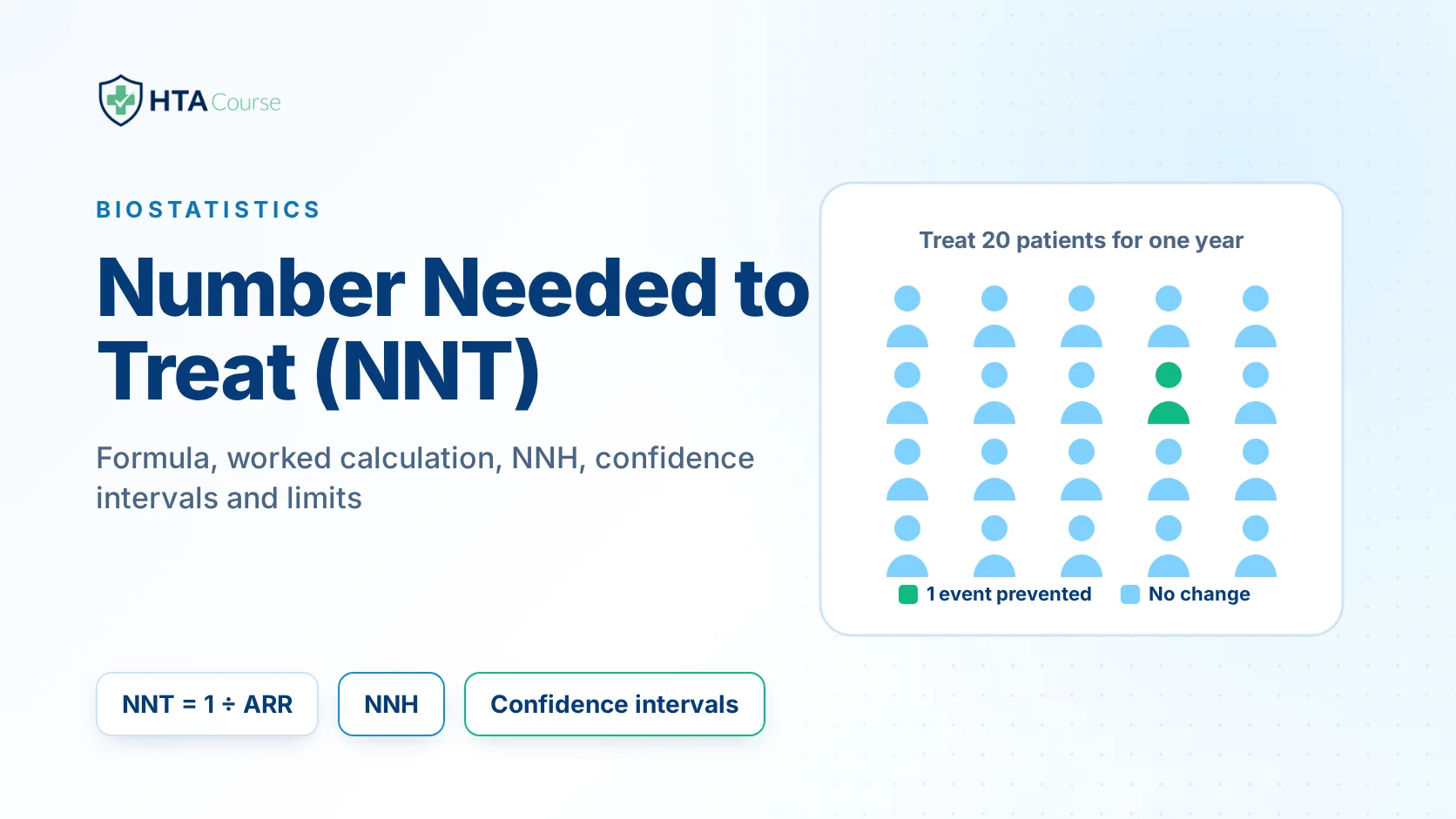
Evidence Synthesis
Number Needed to Treat (NNT): Formula, Calculation and Limits
What the number needed to treat means, how to calculate it from the absolute risk reduction, how to report NNH and confidence intervals, and why HTA looks beyond the NNT.
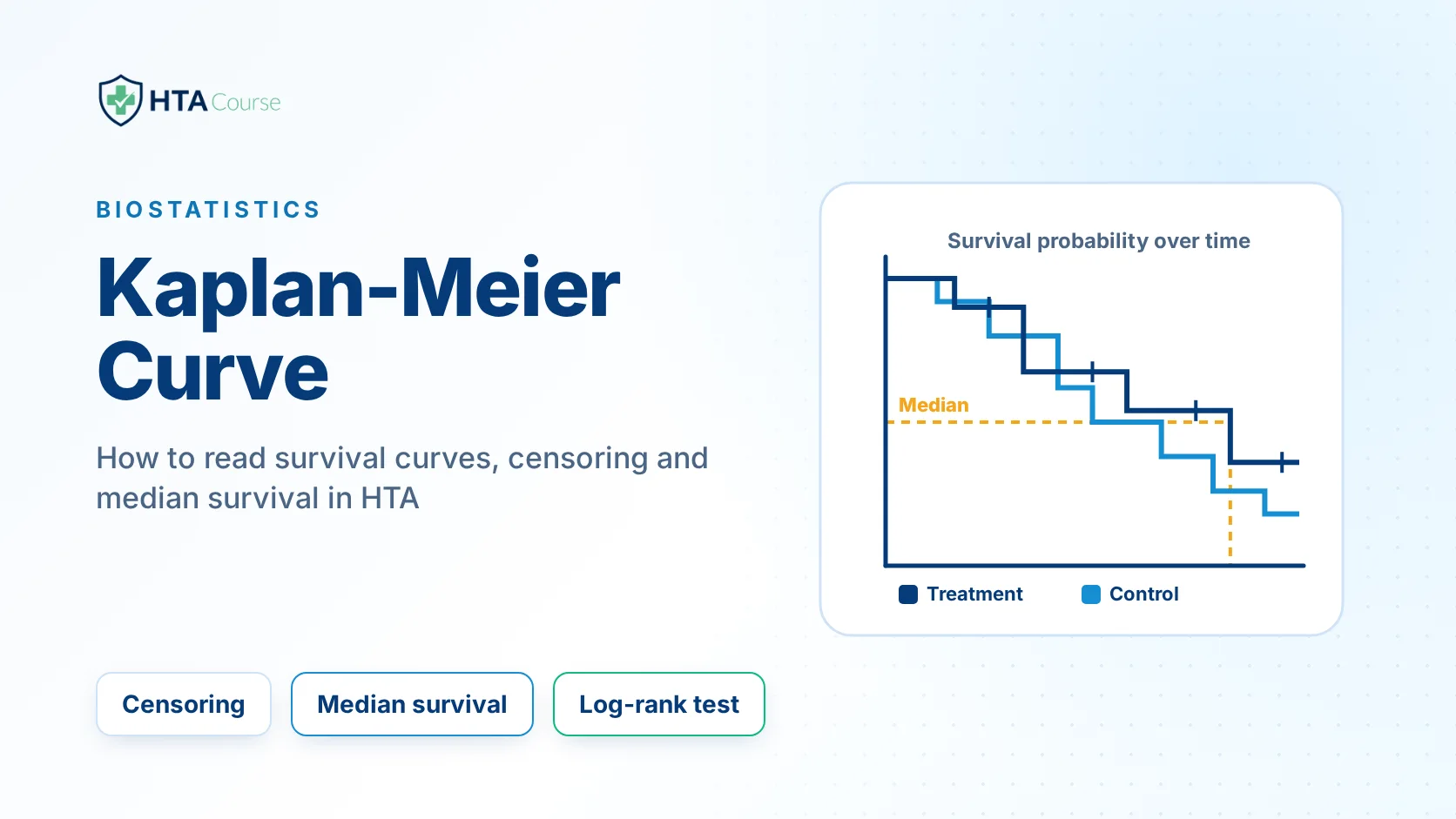
Evidence Synthesis
Kaplan-Meier Curve: How to Read and Use It in HTA
How the Kaplan-Meier estimator works, how to read steps, censoring ticks, numbers at risk and median survival, how curves are compared, and why HTA models extrapolate them.
Evidence Synthesis
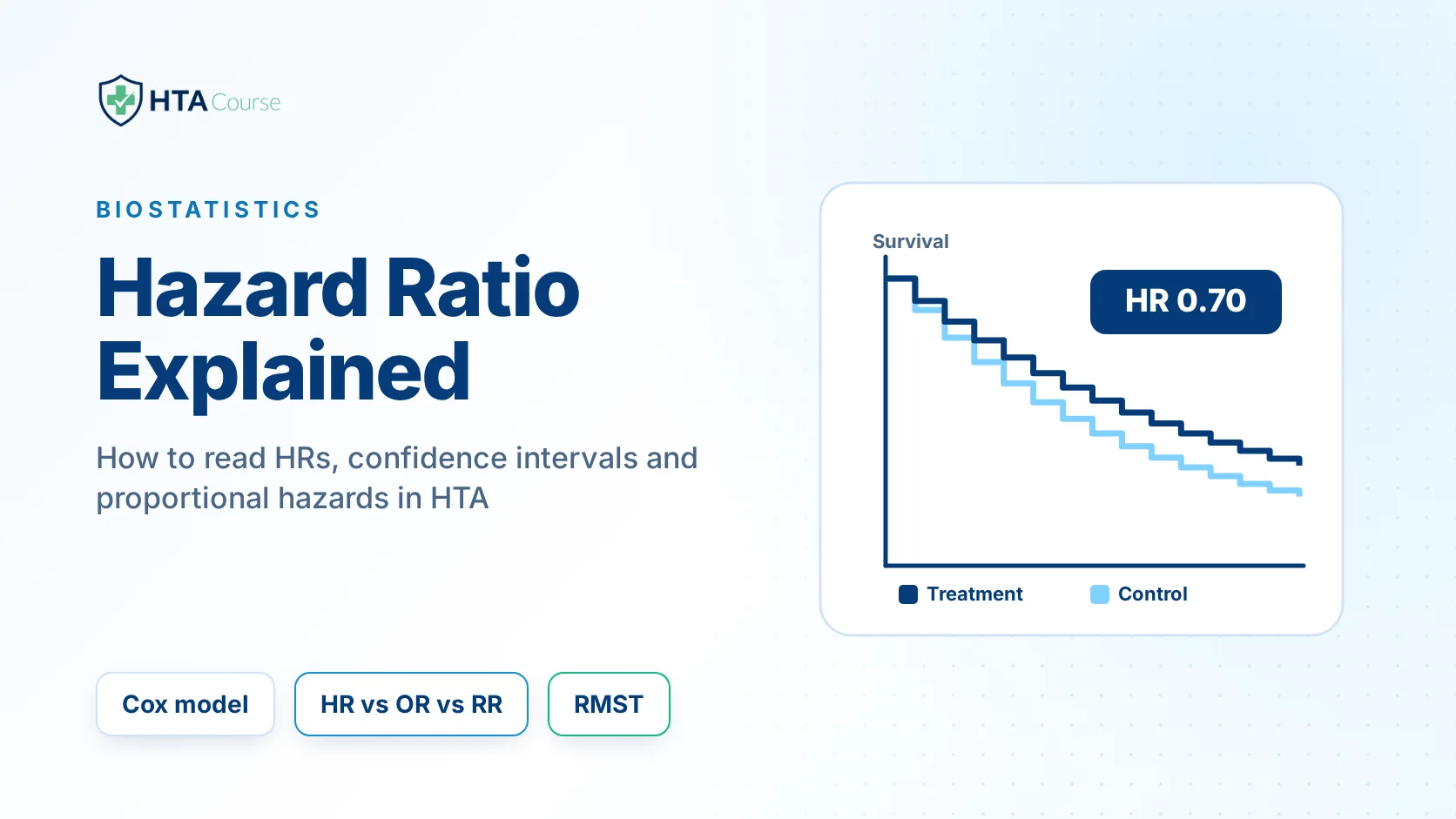
Hazard Ratio Explained: How to Interpret HRs
What a hazard ratio measures, how it is calculated and read with its confidence interval, how it differs from odds ratios and relative risks, and how HTA bodies handle non-proportional hazards.

Evidence Synthesis
Systematic Literature Review in HTA: Steps and Standards
What a systematic literature review is, how it differs from a literature review, the nine steps from protocol to PRISMA 2020, and what NICE, the EU JCA and the G-BA require from SLRs.
Careers & Practice
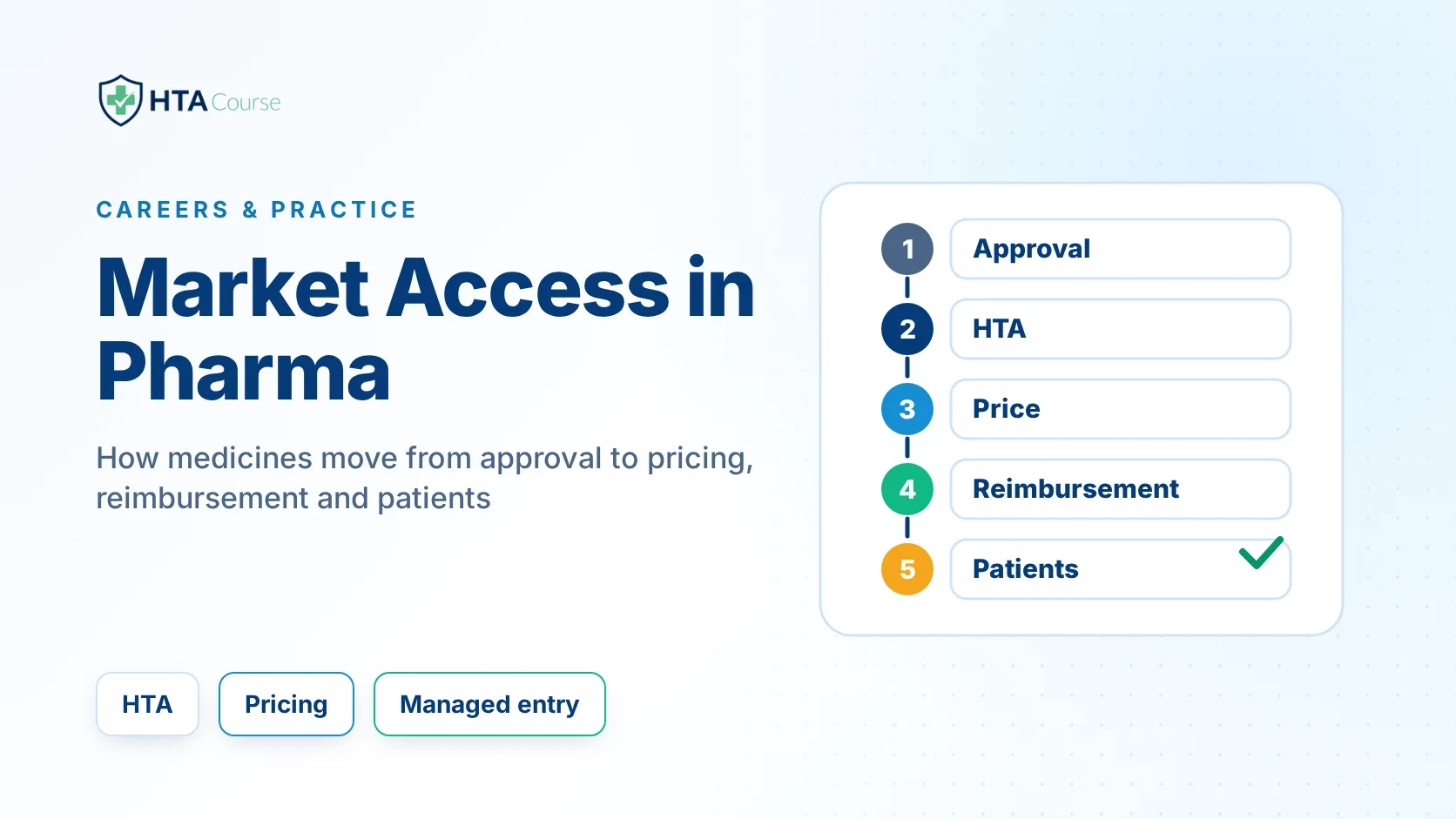
Market Access in Pharma: What It Is and How It Works
Market access in pharma explained: why approval is not access, the pathway from evidence planning to pricing and reimbursement, managed entry agreements, NICE, AMNOG, HAS and US payers, and the roles involved.

Health Economics
Pharmacoeconomics: Definition, Methods and Why It Matters
What pharmacoeconomics is, how it relates to health economics, HEOR and HTA, the four evaluation methods, a worked pricing example, national guidelines and CHEERS 2022.

Health Economics
Health Economic Modelling: Model Types, Steps and Validation
What a health economic model is, why HTA needs one, six model types compared, how to choose a structure, the modelling steps with a worked decision tree, and how models are validated and reported.

EU HTA
EU HTA Regulation Explained: How HTAR 2021/2282 Works
How Regulation (EU) 2021/2282 works as a whole: why it exists, its four pillars, who runs it, the six implementing acts, joint scientific consultations and the phased timeline to 2030.
HTA Fundamentals
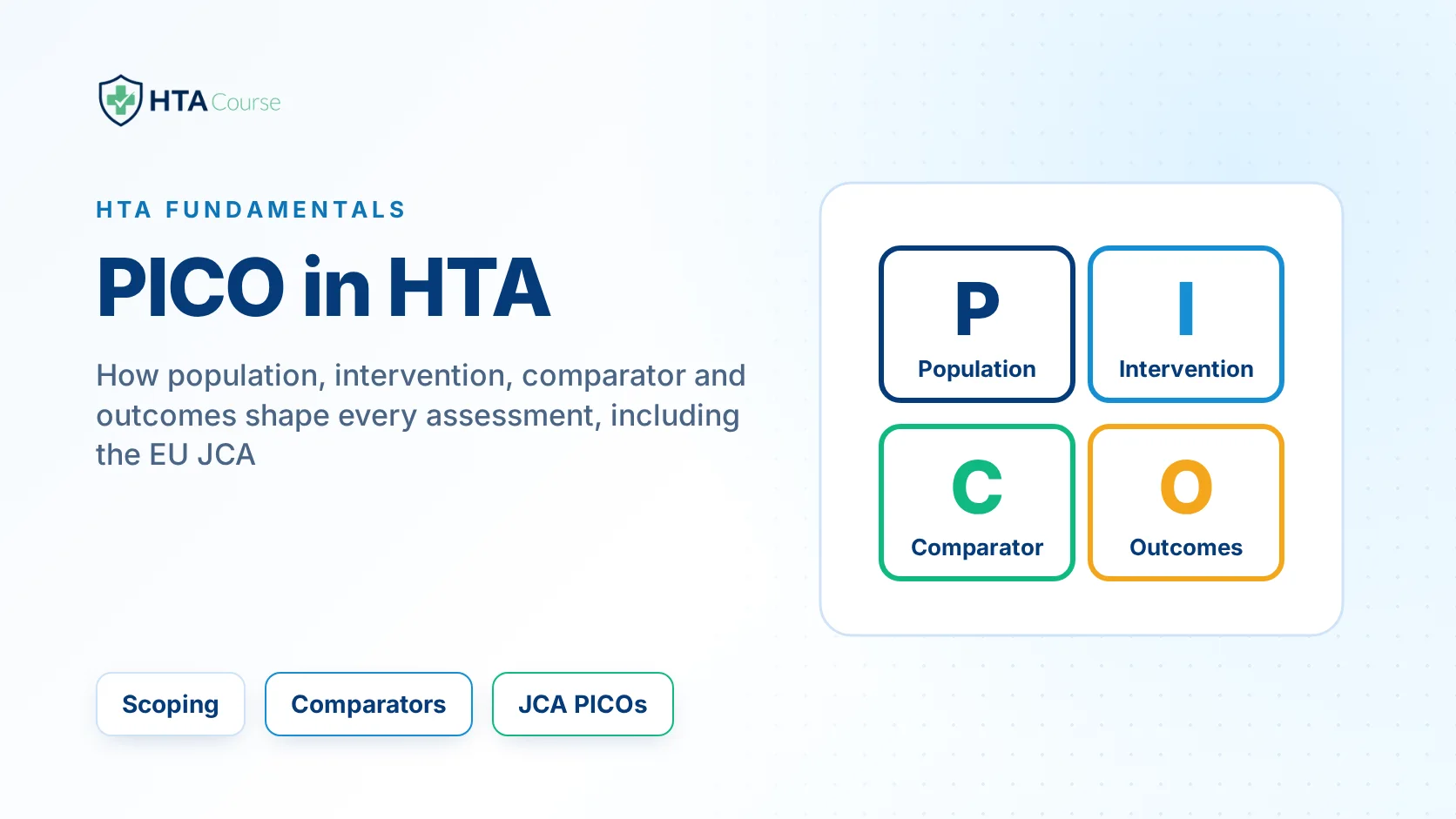
PICO Framework in HTA: Scoping and EU JCA PICOs Explained
What PICO means in health technology assessment, how NICE, the G-BA and HAS set the scope, and how EU joint clinical assessment PICO scoping and consolidation work, with a worked example.
Evidence Synthesis
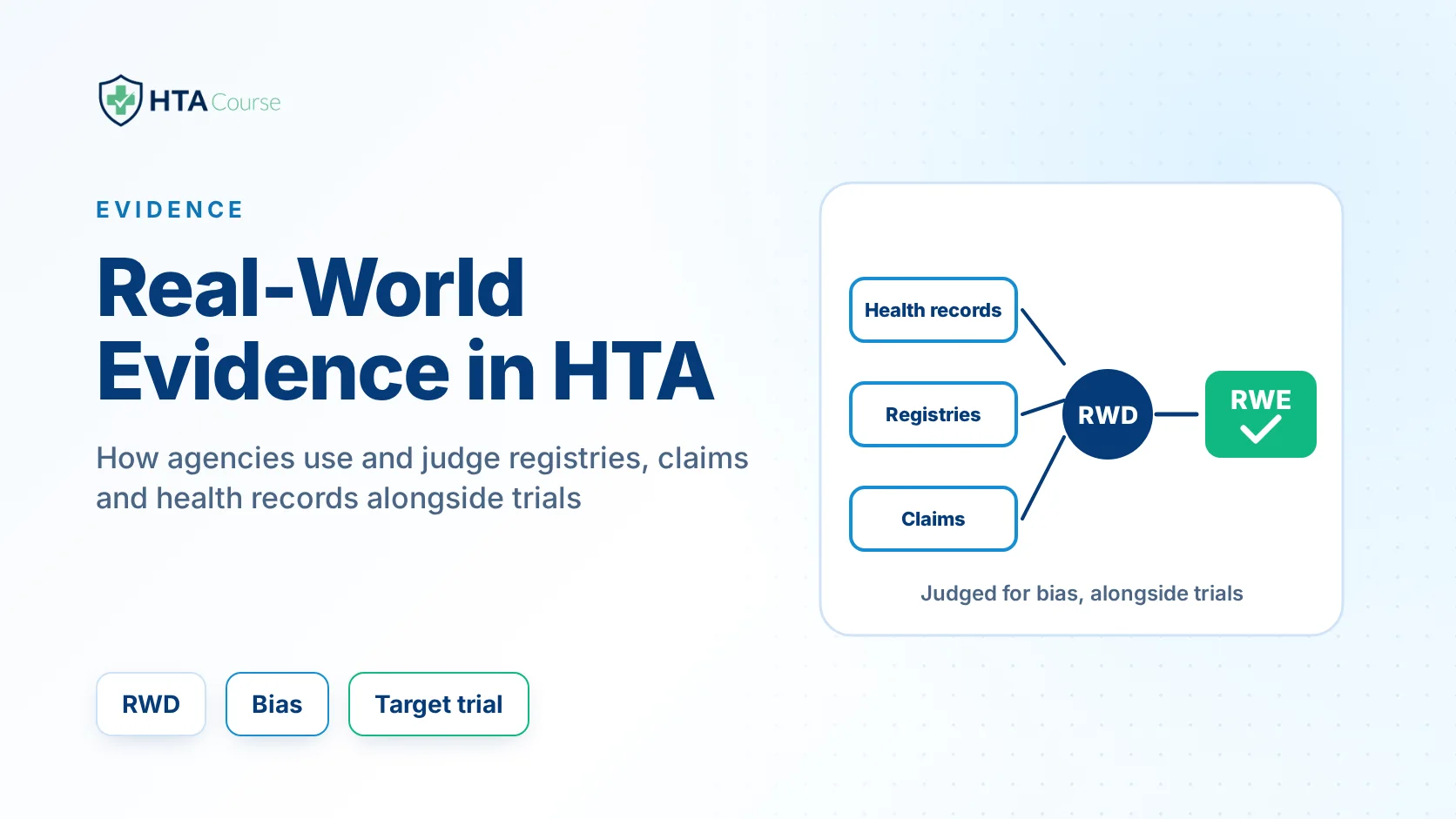
Real-World Evidence in HTA: Uses, Methods and Agency Rules
How HTA bodies use and judge real-world evidence: RWD vs RWE, the NICE framework, EU JCA rules on non-randomised evidence, ICER, external control arms and target trial emulation.
Health Economics
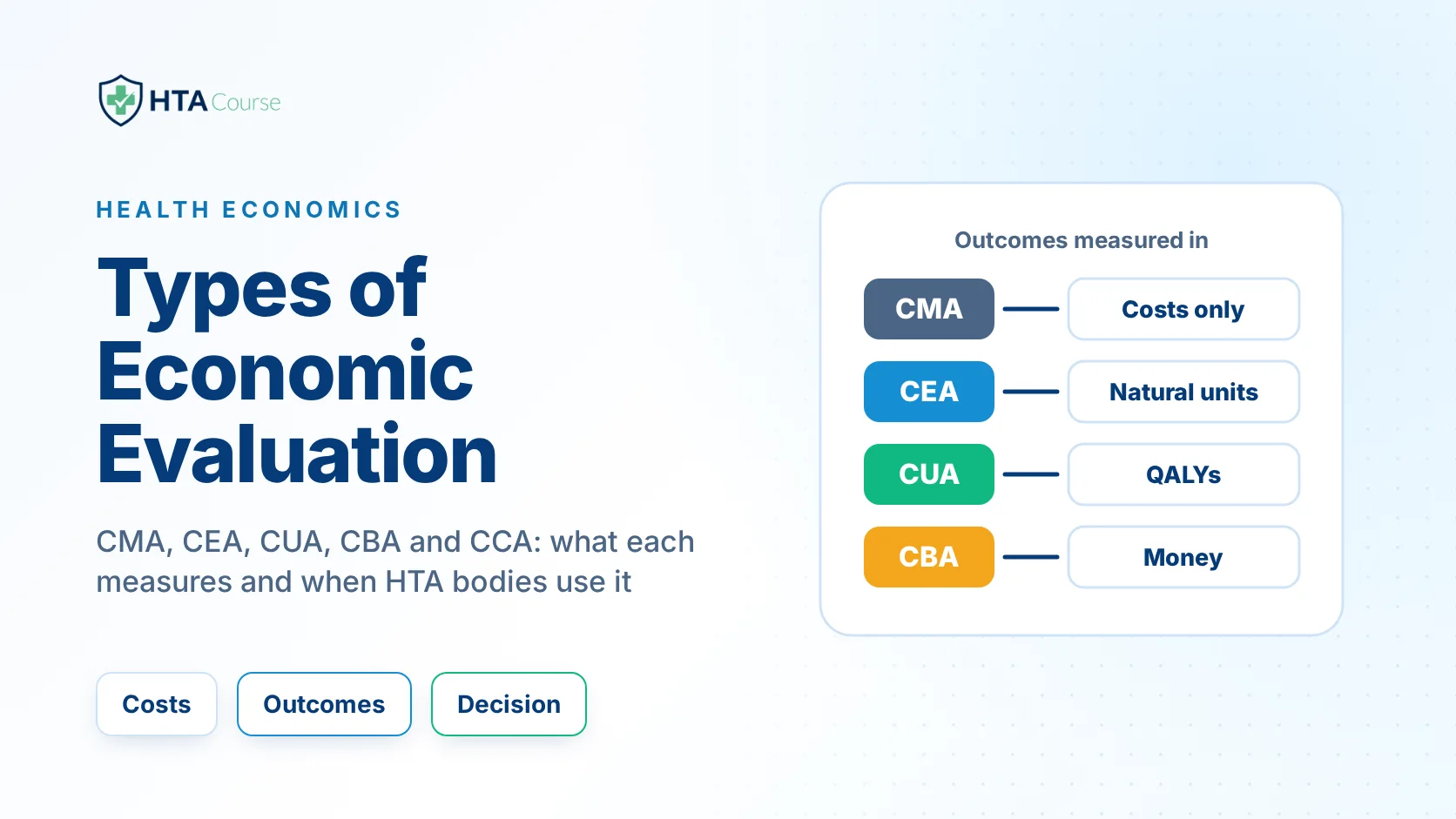
Cost-Effectiveness Analysis vs CUA, CBA and CMA in Health Care
Cost-minimisation, cost-effectiveness, cost-utility, cost-benefit and cost-consequence analysis compared: when each fits, what NICE, CDA-AMC, HAS and ICER require, and a worked example.
Health Economics
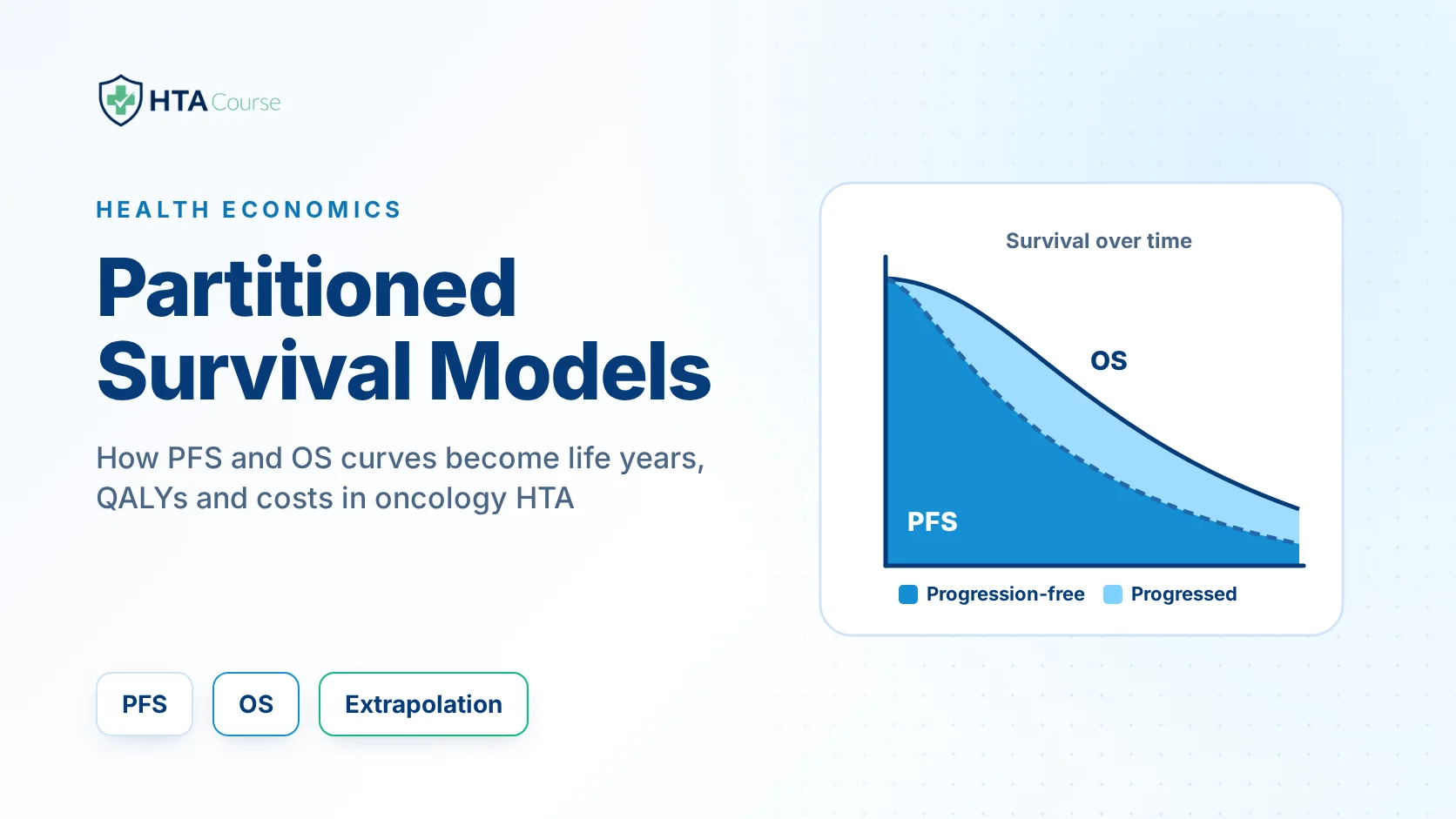
Partitioned Survival Model: How PSMs Work in Oncology HTA
How partitioned survival models turn PFS and OS curves into life years, QALYs and costs, how survival extrapolation is justified under NICE DSU guidance, and when a Markov model is the better choice.

EU HTA
JCA Reports: EU Joint Clinical Assessments Published So Far
Every EU joint clinical assessment report published so far, with dates, PICOs, evidence and the assessors' view of certainty, plus early lessons and what changes in 2028 and 2030.

HTA Agencies
AMNOG Explained: Germany’s G-BA Early Benefit Assessment
How AMNOG works in Germany: the dossier, the appropriate comparator therapy, IQWiG’s assessment, the six added benefit categories, orphan drug rules, price negotiation and the 2026 reforms.

HTA Agencies
SMR and ASMR: How HAS Evaluates Medicines in France
How France's Transparency Committee rates SMR and ASMR, how those ratings set reimbursement rates and CEPS prices, when CEESP assesses efficiency, and where early access and EU JCA reports fit in.

Health Economics
EQ-5D-5L vs EQ-5D-3L: Value Sets and Utility Values
How the EQ-5D questionnaire works, how country value sets turn health state profiles into utility values for QALYs, and what NICE and other HTA agencies require in 2026.

HTA Agencies
Health Technology Assessment in the US: ICER, Medicare and QALYs
The US has no national HTA agency. See how ICER sets QALY and evLY price benchmarks, where the law limits QALYs, how Medicare drug price negotiation works and how payers use AMCP dossiers.

HTA Fundamentals
The HTA Process Step by Step: From Topic Selection to Decision
How health technology assessment works in seven steps, from topic selection and PICO scoping to assessment, appraisal and reimbursement, with examples from NICE, G-BA/IQWiG, HAS, CDA-AMC and the EU JCA.
Health Economics
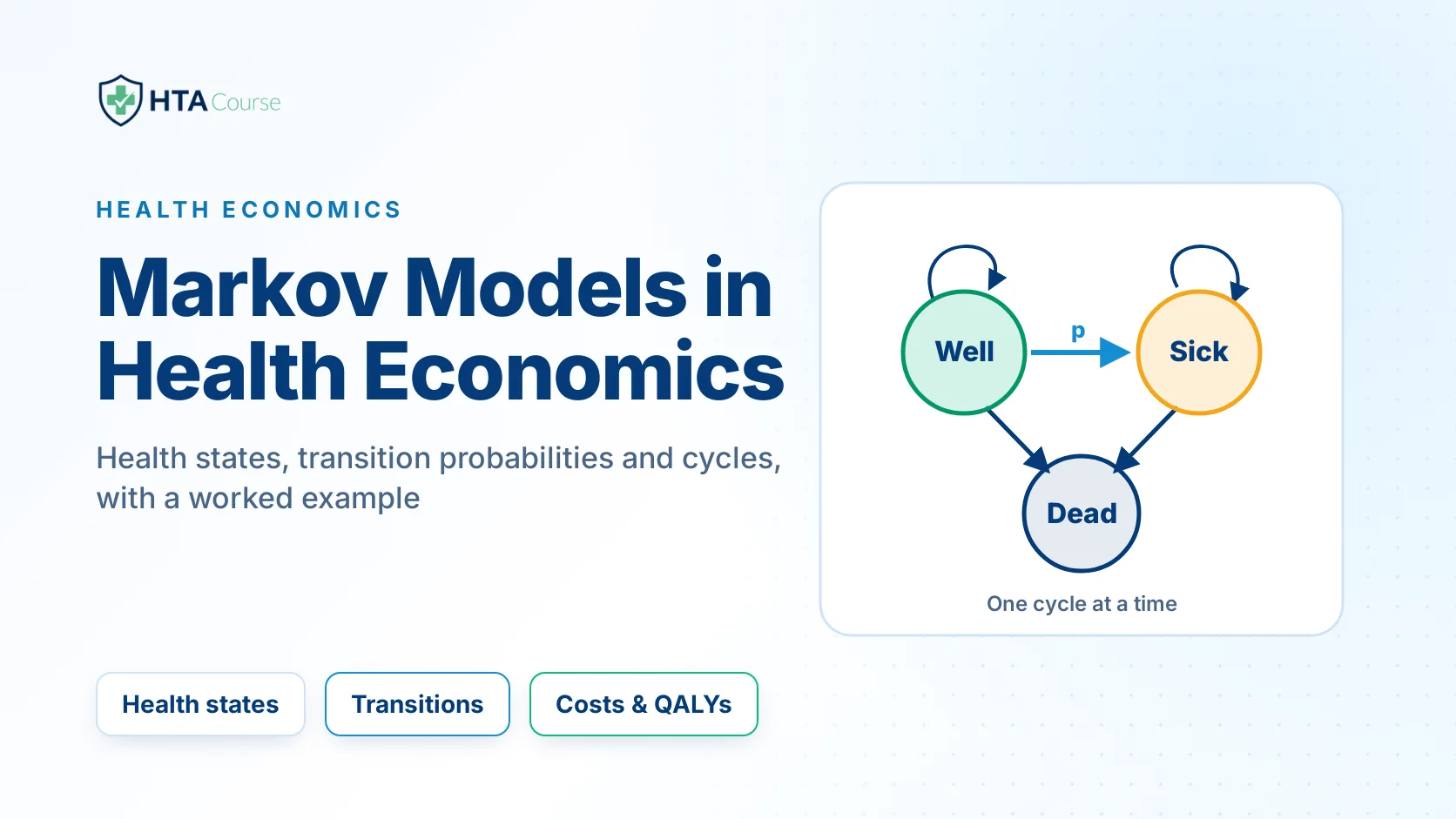
Markov Model in Health Economics: Practical Guide and Example
How Markov cohort models work in cost-effectiveness analysis, with a worked Well–Sick–Dead example, rate-to-probability conversion, half-cycle correction and what HTA assessors check.
Health Economics
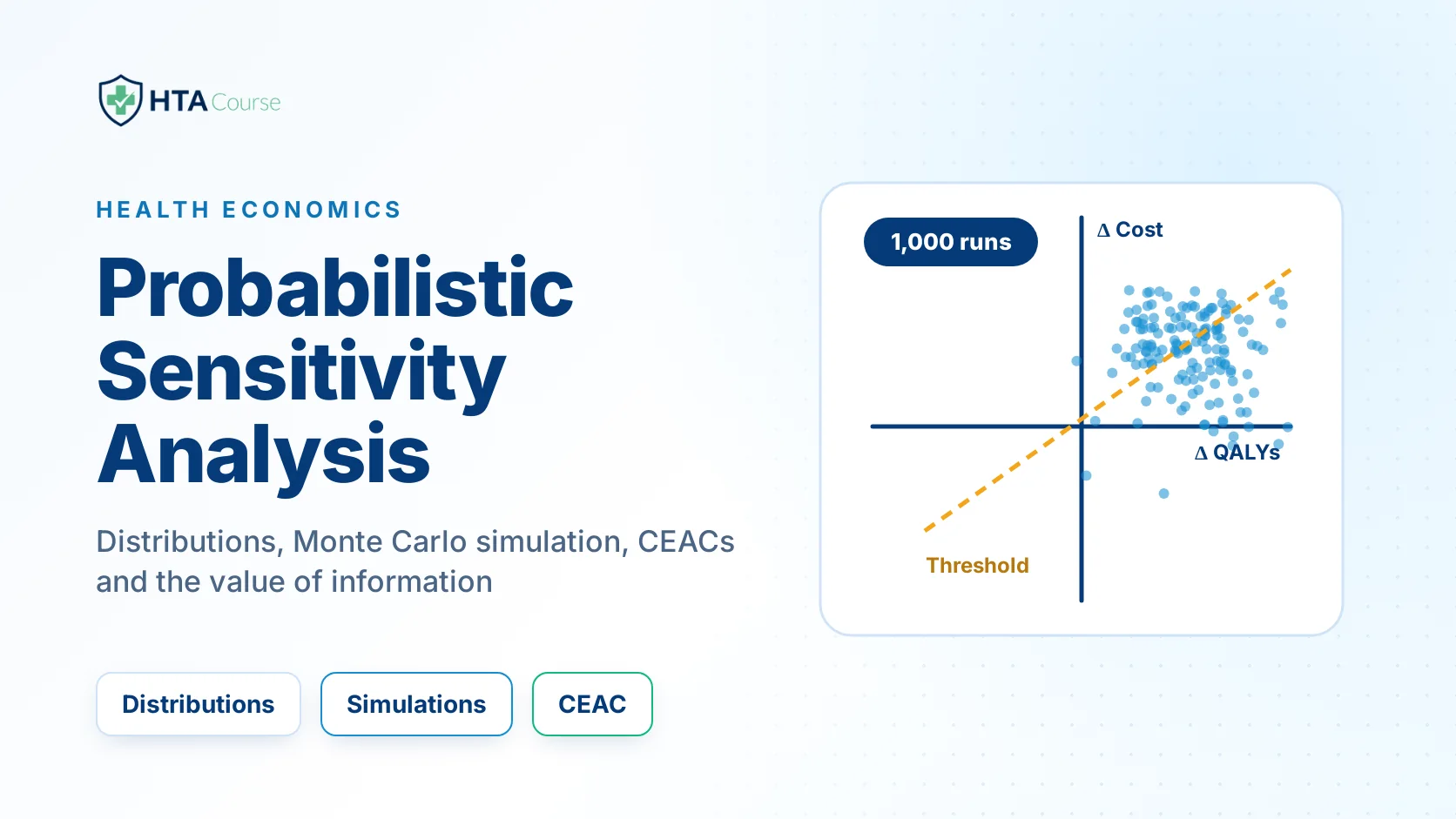
Probabilistic Sensitivity Analysis (PSA) in Health Economics
A practical guide to probabilistic sensitivity analysis in health economic models: distributions, Monte Carlo convergence, scatter plots, CEAC and CEAF, EVPI and what NICE and other HTA agencies expect.
Evidence Synthesis
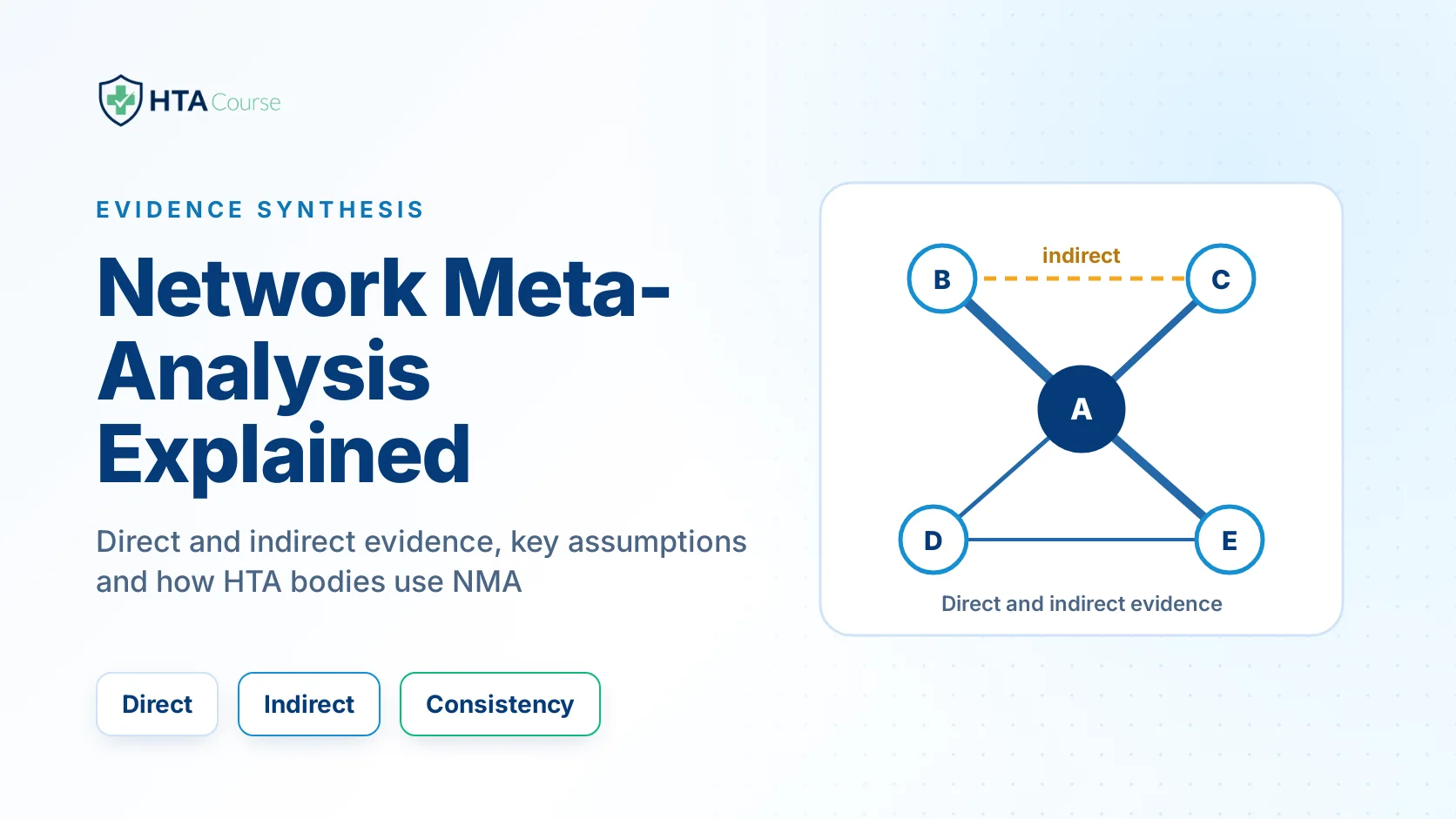
Network Meta-Analysis Explained: Indirect Comparisons for HTA
How network meta-analysis compares treatments never tested head to head: the Bucher method with a worked example, transitivity and consistency, SUCRA, GRADE, MAIC and what NICE and the EU JCA expect.
HTA Agencies
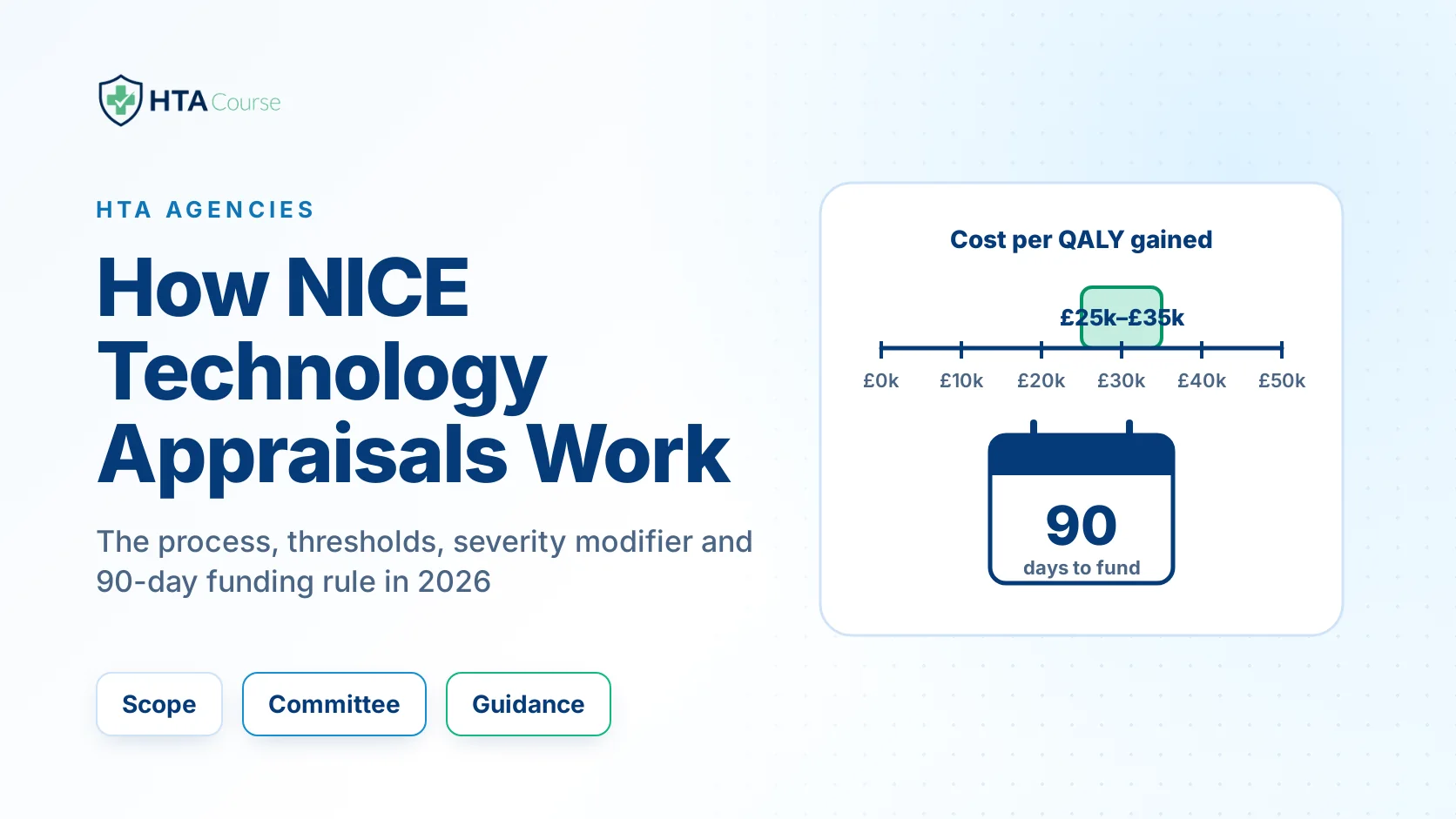
NICE Technology Appraisal (NICE TA): How the Process Works
A step-by-step guide to NICE technology appraisals as of October 2026: the STA timeline, the new cost-effectiveness threshold, the severity modifier, the funding requirement, the Cancer Drugs Fund and the HST route.
EU HTA
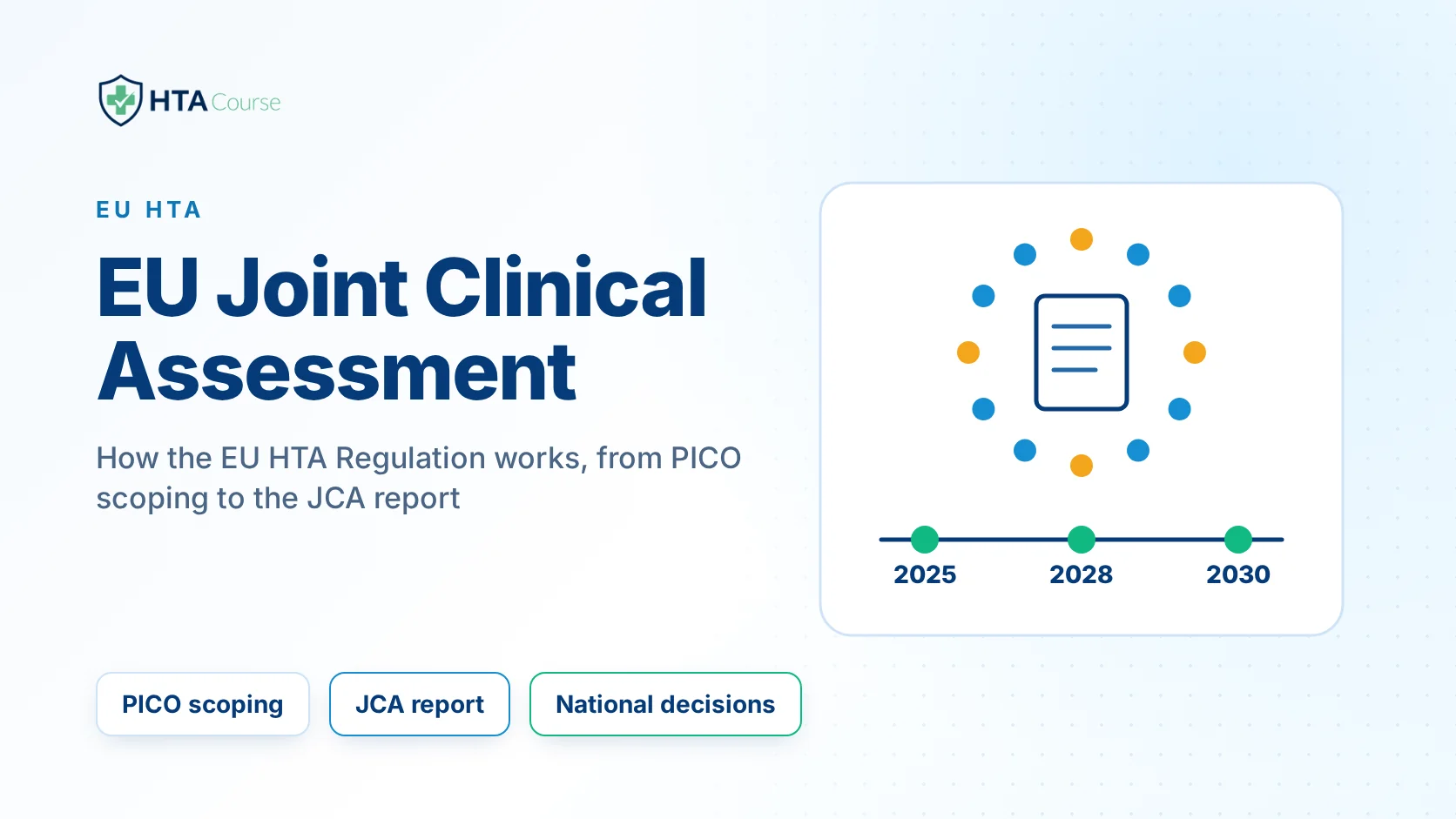
Joint Clinical Assessment (JCA): How the EU HTA Regulation Works
How the EU joint clinical assessment works: the HTA Regulation, phased scope to 2030, PICO scoping, dossier timelines, what the JCA report says and what stays national.
Health Economics
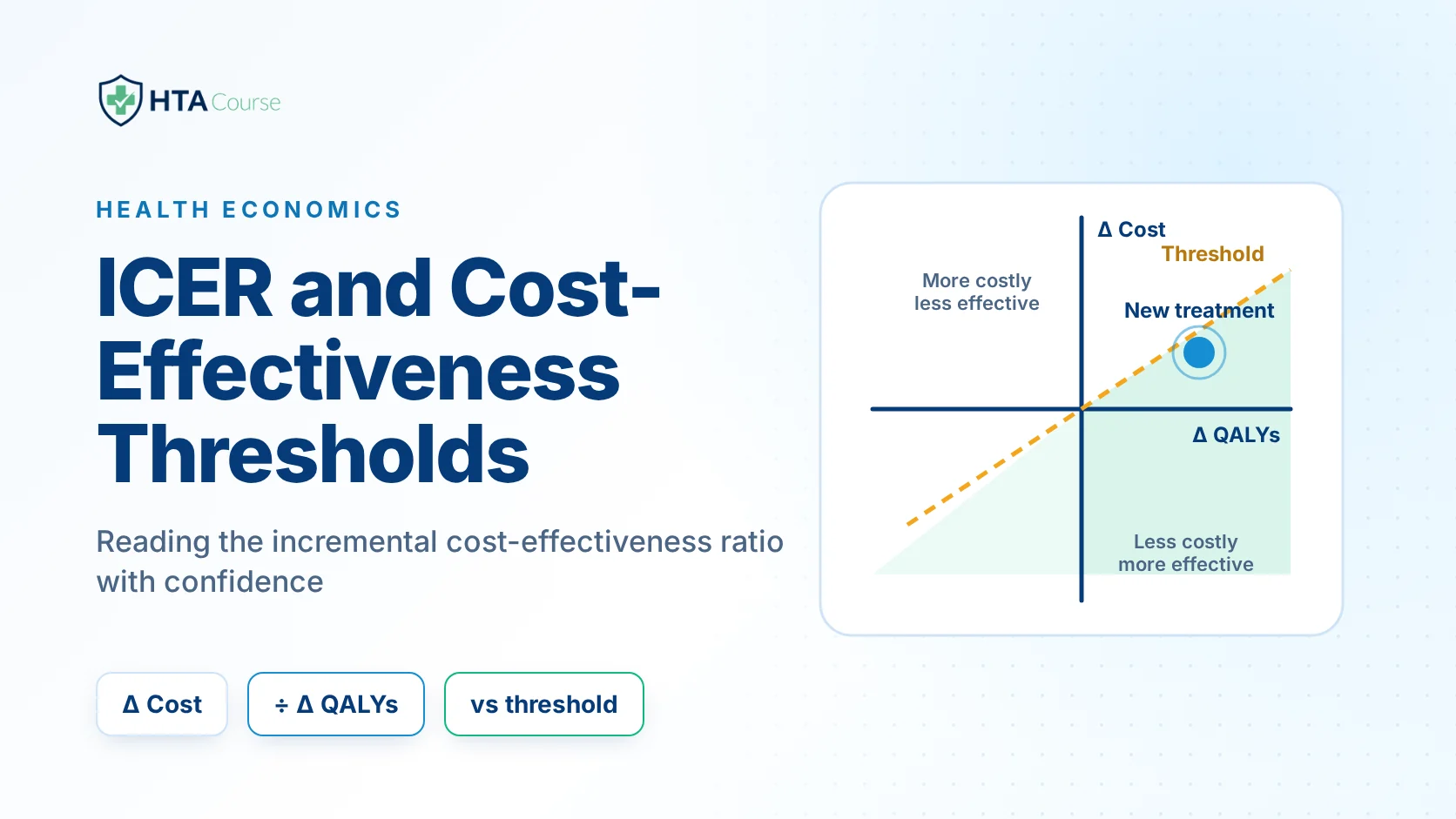
Incremental Cost-Effectiveness Ratio (ICER) and Thresholds
How to calculate and interpret an incremental cost-effectiveness ratio, from the cost-effectiveness plane and dominance to net monetary benefit and 2026 thresholds in England and the US.
Health Economics
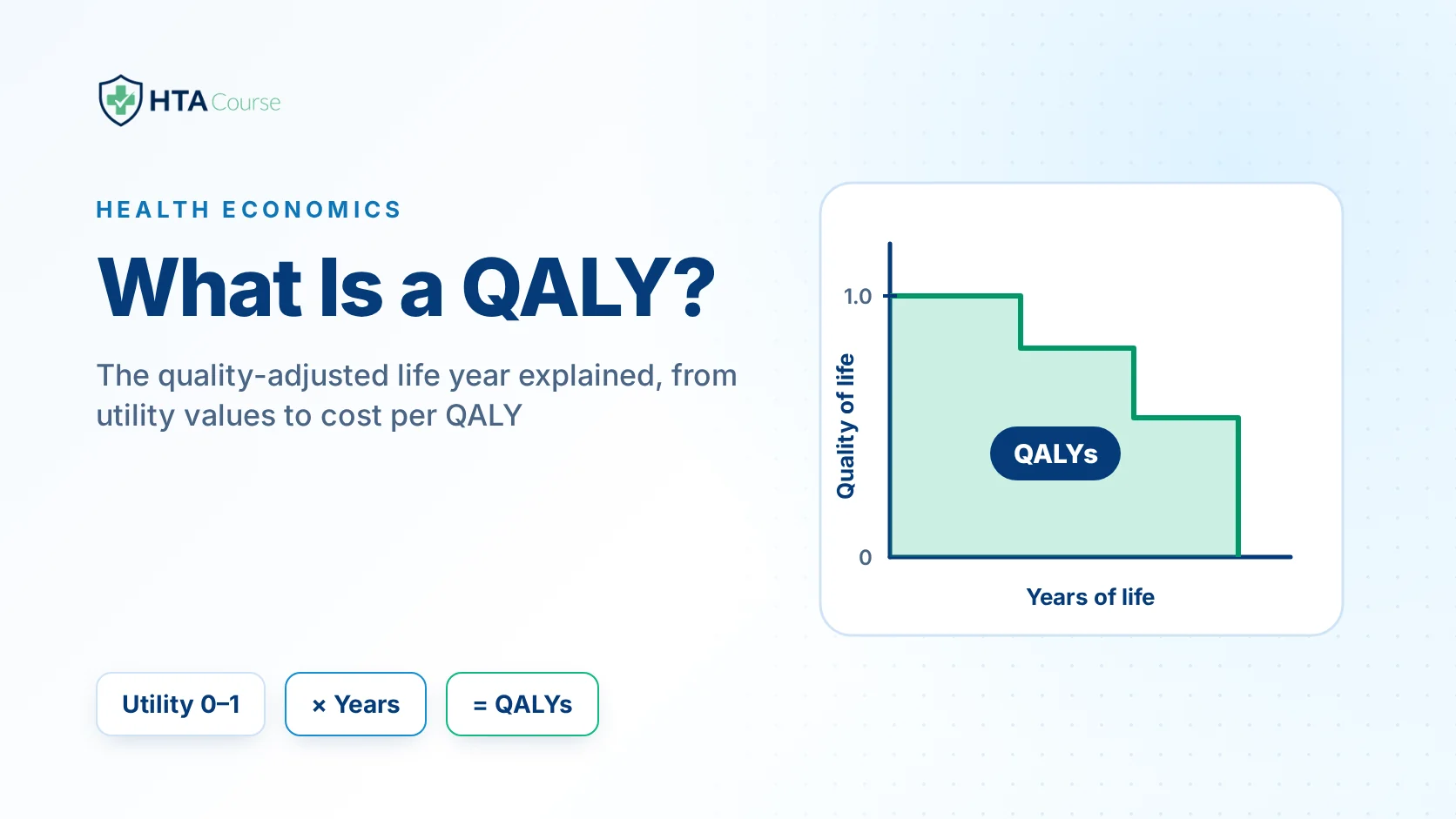
What Is a QALY? The Quality-Adjusted Life Year Explained
A plain-English guide to the quality-adjusted life year: the utility scale, a worked QALY calculation, EQ-5D and value sets, NICE thresholds, the main criticisms and how QALYs differ from DALYs.
Health Economics
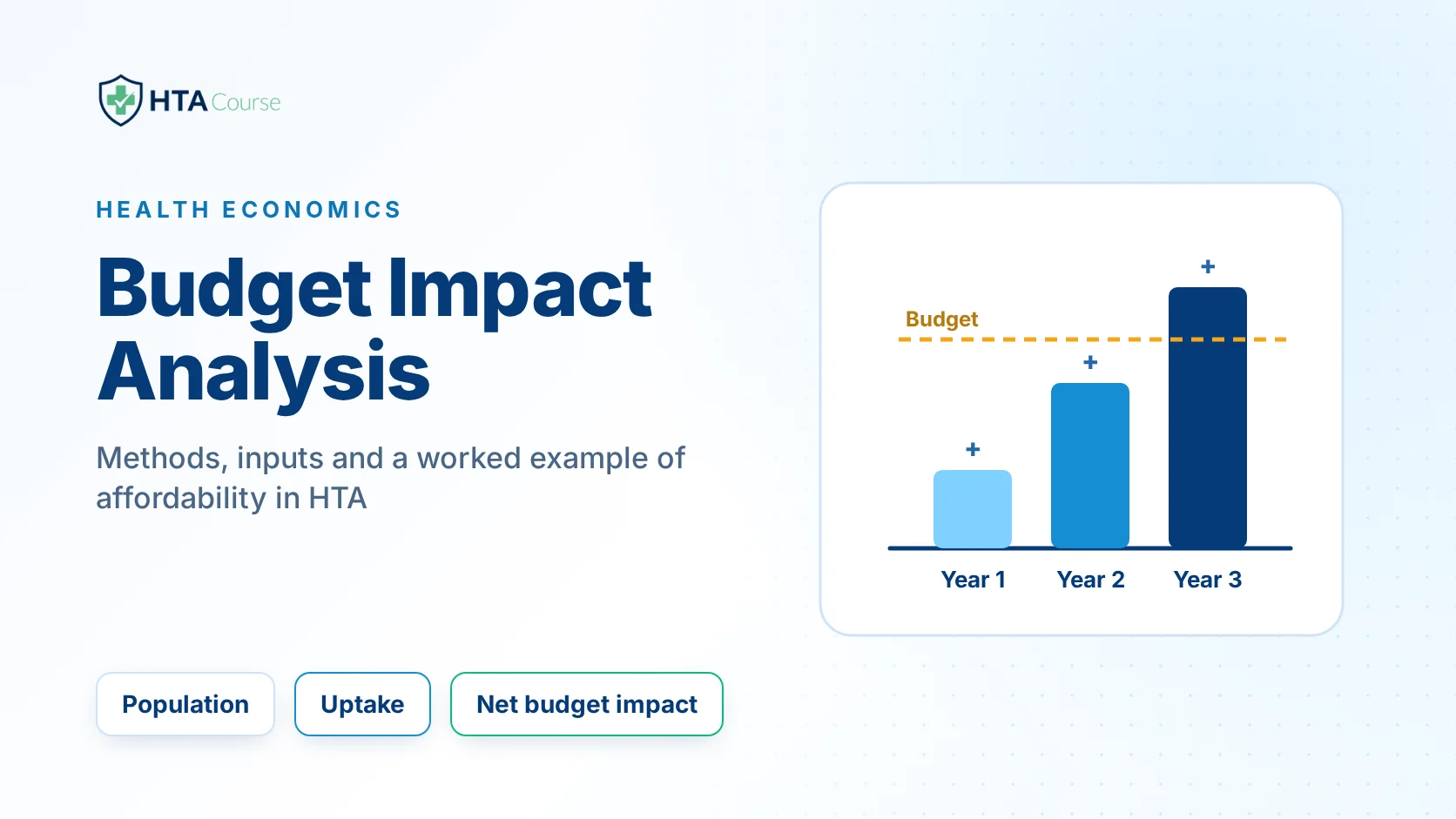
Budget Impact Analysis (BIA): Building a Budget Impact Model
A technology can be cost-effective yet unaffordable. Learn how budget impact analysis works, what ISPOR good practice recommends, and follow a hypothetical three-year example.

Careers & Practice
What Is HEOR? HEOR vs HTA vs Market Access Explained
HEOR generates the evidence, HTA bodies judge it, and market access turns the decision into patient access. How the three connect across the lifecycle, who does what and the skills involved.

HTA Fundamentals
The Nine Domains of HTA: Why Only Four Are Clinical
Safety and clinical effectiveness are just two items on a list of nine. Only four of the nine HTA domains are clinical, and that split is now written into EU law.

HTA Fundamentals
The Definition of Health Technology Assessment: How HTA Took 44 Years to Define
The first HTA report appeared in 1976. The first definition the field collectively agreed on was published in 2020. How the definition was built, and why the words matter.

HTA Fundamentals
What Is Health Technology Assessment (HTA)?
Regulatory approval allows a health technology onto the market. HTA asks the question that comes next: what does it add compared with current care, and is that added value worth the cost?